Online before China? The 1995 boast, and the state decisions behind India's data centres
VSNL's Independence Day internet was not first in Asia. What it began was a chain of state choices, from STPI's earth stations to RBI's data rule, that private capital has filled ever since.
The short version · five beatsOpen ↓Close ↑
- AnchorIndependence Day 1995: VSNL opens India's first public internet at 9.6 kbit/s, ₹5,200 for 250 hours.
- CrackThe famous line that India was online before China is wrong by about three months, and that is the least interesting thing about it.
- MachineA chain of state decisions: STPI's parks and earth stations (1991), VSNL's gateway (1995), NIC's MeghRaj (2014), RBI's localisation rule (2018), infrastructure status (2022). Sify, the hyperscalers and the gigawatt campuses filled each one.
- The truthNavi Mumbai's hold on Indian compute (Mumbai is 52% of operational stock on CBRE's count) traces back to a choice made in 2000, and the newest private bets still begin by building a gateway.
- Send-lineEvery gigawatt India announces today walks through a door the state opened decades earlier.
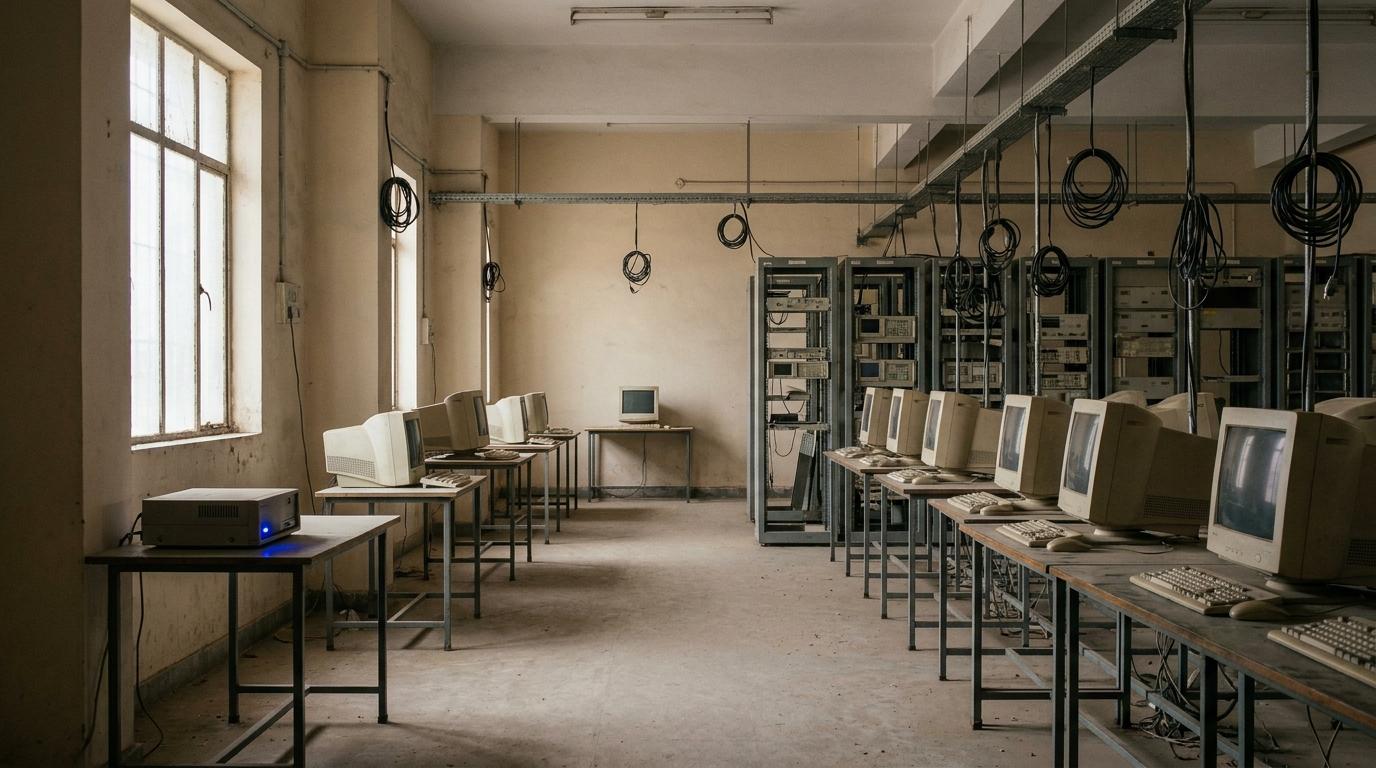
India's public internet was timed to a flag. Videsh Sanchar Nigam Limited, the state monopoly that owned the country's international telephone lines, opened its Gateway Internet Access Service for Independence Day 1995. B. K. Syngal, who ran VSNL, later wrote that the launch date was "set as 15 August 1995—actually the day before, so that the announcement would come on Independence Day." The service ran at 9.6 kbit/s and, by Wikipedia's account, cost an individual ₹5,200 for 250 hours. At that speed, the photograph at the top of this page would take more than ten minutes to arrive.
Thirty-one years later, India's data-centre sector counts its investment commitments in hundreds of billions of dollars. The line between those two moments is not a story of entrepreneurs outrunning a slow state. It is a chain of state decisions (a park, a gateway, a government cloud, a payments rule, a line in a gazette) that private capital then filled. Read in order, the dates explain why so much of India's compute still sits in one corner of Navi Mumbai.
The boast, checked
Syngal's memoir, excerpted by ThePrint in 2020, carries a line Indians still like to repeat: when VSNL introduced internet services in 1995, "even China did not have the net." He adds that a Chinese vice-minister visited VSNL in 1996 to learn the trade.
The dates do not support the boast. China had held a permanent connection to the internet since 20 April 1994. According to the China Internet Museum, the Ministry of Posts and Telecommunications began offering access to institutions in January 1995 over leased lines from Beijing and Shanghai, and on 17 May 1995 it "officially opened Internet access business to the public" from a counter in Beijing's Xidan district. By that record, ordinary people in Beijing could buy an internet account three months before anyone in Bombay could.
The correction matters less than what survives it. Both countries opened the door the same way: through the state telecom monopoly, because only the state owned the international circuits. Syngal says as much. The government weighed the Department of Telecommunications, MTNL and VSNL, and "leaned towards us because we had the international connectivity." VSNL bought 128 kbps lines to Australia, Japan, Hong Kong, the US and the UK, and wired five cities: Delhi, Bombay, Calcutta, Madras and Pune. Bangalore, he admits, was left out, because VSNL already had a large set-up in Pune.
That is the first pattern. Where the state put the gateway, the traffic followed.
Before the gateway, the parks
The real first move came four years earlier. On 5 June 1991, the Department of Electronics registered Software Technology Parks of India as an autonomous society. It merged three existing parks at Pune, Bengaluru and Bhubaneswar into one institution with a narrow, practical job: let software exporters clear paperwork at a single window, and give them a way to send code abroad.
That second job was physical. STPI's own history says every centre was equipped with "dedicated earth station equipment for providing Data Communication links." Before India had a public internet, it had satellite dishes on government-run parks, rented to companies that needed to reach clients in the US and Europe. STPI was a data-communications utility before anyone used that phrase.
STPI says its registered units exported ₹52 crore of software in 1992-93 and ₹10,69,270.59 crore in 2024-25, about half the country's software exports. The park model, a state body assembling land, clearances and connectivity in one place, is the template that every later data-centre policy has borrowed.
A room built for other people's computers
The private sector arrived in earnest in September 2000. Sify commissioned what it calls India's first commercial data centre at the Infotech Park in Vashi, Navi Mumbai. Its chairman, Raju Vegesna, described it in 2021 as the country's "first concurrently-maintainable data center," meaning any single component could be serviced without switching the building off.
Vashi sat inside a planned technology park, across the creek from Mumbai's banks. Nobody in 2000 could have known it was setting the map for the next quarter-century. By Sify's 25th-anniversary count, it now runs 15 data centres with about 200 MW live. The market around it has grown far larger.
On CBRE's count, Mumbai held 52% of India's operational data-centre stock at the end of June 2026, and took 94% of the new supply added in the first half of the year. CBRE names Navi Mumbai as one of the established micro-markets, held in place by multiple cable landing stations and an established financial ecosystem. The gravity Sify found in 2000 has not weakened. It has compounded.
The state builds its own cloud, then lets the giants in
For most of the 2000s the government was a customer, not a builder. That changed on 4 February 2014, when the communications minister Kapil Sibal launched the National Cloud under an initiative called MeghRaj. It was run by the National Informatics Centre, the government's in-house technology arm, and its pitch was accounting as much as engineering: departments could now buy computing "on demand in the OPEX model rather than investing upfront on the CAPEX."
MeghRaj never shows up in market capacity tables, because NIC is not selling to the market. But it made renting compute respectable inside government, a year and a half before the first foreign hyperscaler opened an Indian region.
Then the giants came, each with a Mumbai region:
- 29 September 2015: Microsoft opened three Azure regions in Pune, Chennai and Mumbai, calling itself the first public cloud provider to serve India from local data centres.
- 27 June 2016: Amazon Web Services opened its Asia Pacific (Mumbai) region, with two availability zones.
- 1 November 2017: Google Cloud opened its Mumbai region, its first in India, with private connections offered at two Mumbai interconnection sites.
None of these needed a subsidy. What they needed was a reason to keep Indian data in India, and the state was about to supply one.
The rules that made capacity compulsory
On 6 April 2018 the Reserve Bank of India told every payment system operator that, within six months, "the entire data relating to payment systems operated by them is stored in a system only in India." The RBI's later FAQ closed the loopholes: data processed abroad had to be deleted there and brought home within one business day or 24 hours.
It was the first hard localisation rule, and it turned a preference into an obligation. Every card network, wallet and payment gateway now needed racks on Indian soil. The banks that wanted those racks near them were, overwhelmingly, in Mumbai.
The second instrument was quieter. On 11 October 2022 the Department of Economic Affairs added "Data Centres" to the Harmonized Master List of Infrastructure sub-sectors, under "Communication", for buildings with a minimum of 5 MW of IT load. One footnote in a gazette moved data centres into the same lending category as roads and power lines. As The Hindu reported, the point was easier access to institutional credit at lower rates.
The gigawatt years
What followed is the period most readers know. On 14 October 2025 Google announced its first AI hub in India, about USD 15 billion over 2026-2030 in Visakhapatnam, with gigawatt-scale compute built alongside AdaniConneX and Airtel. On 19 February 2026, at the India AI Impact Summit, Reliance's Mukesh Ambani unveiled a ₹10 trillion plan, about USD 110 billion over seven years, for AI computing infrastructure; TechCrunch noted Adani had outlined about USD 100 billion of its own that week. (Our profile of Jamnagar follows the Reliance thread.)
CBRE puts cumulative investment commitments since 2021 at about USD 173 billion by June 2026, including about USD 38 billion in the first half of 2026 alone, and expects operational capacity to reach about 2 GW by the end of the year. In the same half-year, the country added about 130 MW. Commitments are counted in billions of dollars; buildings come online a few dozen megawatts at a time.
What 1995 explains about 2026
Look again at Google's announcement. Its Visakhapatnam hub is not only a campus. It includes "a major new international subsea gateway", multiple cables landing on the east coast to complement those at Mumbai and Chennai. Thirty-one years after the government chose VSNL because it held the international circuits, the largest private bet in Indian computing still begins by building a gateway.
The cast has changed. STPI now runs startup incubators; NIC runs a government cloud few citizens know they use. The method has not. The state picks the door (a park, a gateway, a mandate, a lending category, now a tax holiday) and private capital walks through it, usually towards wherever the last door was. That is why Navi Mumbai, chosen in 2000 for reasons that made sense in 2000, still takes most of the megawatts in 2026.
The boast about China was wrong. The instinct behind it, that 1995 was a national decision rather than a market accident, was right.
What we don't know
- How much of the USD 173 billion CBRE counts as commitments becomes operating capacity, and when. CBRE's own test date is 31 December 2026.
- Whether new doors (east-coast gateways, state parks in Telangana, Andhra Pradesh and beyond) can loosen Mumbai's hold, or only add a second centre of gravity. Our piece on why data centres live by the sea maps that question.
- What the next state decision is. The 2026 Budget's tax holiday for foreign cloud providers is the newest door; read its terms carefully.
Sources 24
- How VSNL launched internet services in India in 1995 when even China hadn't (excerpt, Telecom Man) — ThePrint, 2020-02-08
- How the Internet Came to India on Independence Day 1995 — The Better India, 2025-08-13
- Internet in India — Wikipedia, 2026
- Internet in China — Wikipedia, 2026-10
- History — 1995 — China Internet Museum, n.d.
- A Brief History (of the internet in China) — ANU Press, n.d.
- STPI celebrates 33rd Foundation Day — PIB, 2024-06-05
- STPI Background — STPI, n.d.
- About STPI — STPI, 2026
- India's First Commercial Data Center Completes 21 Years of Operations — Sify Technologies, 2021-09-20
- 25 Years of Sify Data Centers — Sify Technologies, 2025
- Beyond Growth: India's Rise Among APAC's Leading Data Centre Markets — CBRE India, 2026-09-21
- India's data centre capacity to hit 2 GW by 2026-end: CBRE — ETTelecom, 2026-10-06
- Shri Kapil Sibal Launches 'National Cloud' Under 'MeghRaj' — PIB, 2014-02-04
- Microsoft Launches Commercial Cloud Services from Local Datacenters in India — Microsoft, 2015-09-29
- Now Open – AWS Asia Pacific (Mumbai) Region — AWS News Blog, 2016-06-27
- GCP arrives in India with launch of Mumbai region — Google Cloud Blog, 2017-11-01
- Storage of Payment System Data (FAQs) — Reserve Bank of India, 2019-06-26
- Updated Harmonized Master List of Infrastructure Sub-sectors (DEA notification, 11 Oct 2022) — Taxguru (reproducing Gazette), 2022-10-11
- Harmonised Master List of Infrastructure Sub-sectors 2022 (Gazette PDF) — PPP in India, Ministry of Finance, 2022-10-11
- Govt. accords infrastructure status to data centres with more than 5 MW capacity — The Hindu (PTI), 2022-10-13
- Our First AI Hub in India, Powered by a $15 Billion Investment — Google, 2025-10-14
- Reliance unveils $110B AI investment plan as India ramps up tech ambitions — TechCrunch, 2026-02-19
- India drew $38 billion of data center pledges in six months — DC Market Insights, 2026-10-18
Every figure in this piece, and where it comes from 24 checked ↓
- VSNL's GIAS launch date was set as 15 August 1995, 'actually the day before', so the announcement came on Independence Day — source
- GIAS ran at 9.6 kbit/s; ₹5,200 for 250 hours for individuals — source
- Syngal: 'even China did not have the net'; Chinese vice-minister visited VSNL in 1996 — source
- China on the internet on a permanent basis since 20 April 1994 — source
- China's MPT offered access to institutions from Jan 1995 and opened internet access to the public on 17 May 1995 in Beijing (Xidan) — source
- Jan 1995: China Telecom opened two 64K lines to the US and began offering internet service to the general public — source
- Government chose VSNL for its international connectivity; 128 kbps lines to Australia, Japan, HK, US, UK; five cities incl. Pune, Bangalore left out — source
- STPI established and registered as an autonomous society on 5 June 1991 under the then Department of Electronics — source
- Three STPs at Pune, Bengaluru, Bhubaneswar merged into STPI; all STPIs equipped with dedicated earth station equipment for data communication — source
- STPI-registered unit exports: ₹52 crore in 1992-93 to ₹10,69,270.59 crore in 2024-25, about 50% of national software exports — source
- Sify's Vashi facility at Infotech Park, launched Sept 2000, India's first commercial and first concurrently-maintainable data centre — source
- Sify: 15 data centres in operation, ~200 MW live — source
- Mumbai 52% of operational DC stock end-H1 2026; USD 173 bn commitments since 2021, ~USD 38 bn in H1 2026 (CBRE) — source
- CBRE: ~130 MW added H1 2026, ~2 GW operational expected by end-2026, Mumbai 94% of H1 new supply; Navi Mumbai an established micro-market — source
- National Cloud under MeghRaj launched 4 Feb 2014 by Kapil Sibal, implemented by NIC; OPEX not CAPEX — source
- Microsoft opened three Azure regions in Pune, Chennai, Mumbai on 29 Sept 2015 — source
- AWS Asia Pacific (Mumbai) region opened 27 June 2016 with two availability zones — source
- Google Cloud Mumbai region (asia-south1), its first in India, opened 1 Nov 2017 — source
- RBI circular dated 6 April 2018: payment data stored only in India within six months; data processed abroad returned within one business day or 24 hours — source
- DEA notification of 11 Oct 2022 added Data Centres (min 5 MW IT load) to Harmonized Master List under Communication — source
- Infrastructure status aimed at easier access to institutional credit at lower rates — source
- Google's Vizag AI hub, 14 Oct 2025: ~USD 15 bn over 2026-2030, gigawatt-scale, with AdaniConneX and Airtel, new international subsea gateway — source
- Reliance ₹10 trillion (~USD 110 bn) AI plan over seven years, 19 Feb 2026; Adani ~USD 100 bn the same week — source
- Budget 2026-27 proposed tax holiday to 2047 for eligible foreign cloud companies using MeitY-notified Indian data centres — source
In this story 14
Itihas — “so it was”
Narrative and dated: treats institutions as characters, loves the precise date and the forgotten first, and connects every origin to this year.
More from the desk
AI & Data Centers →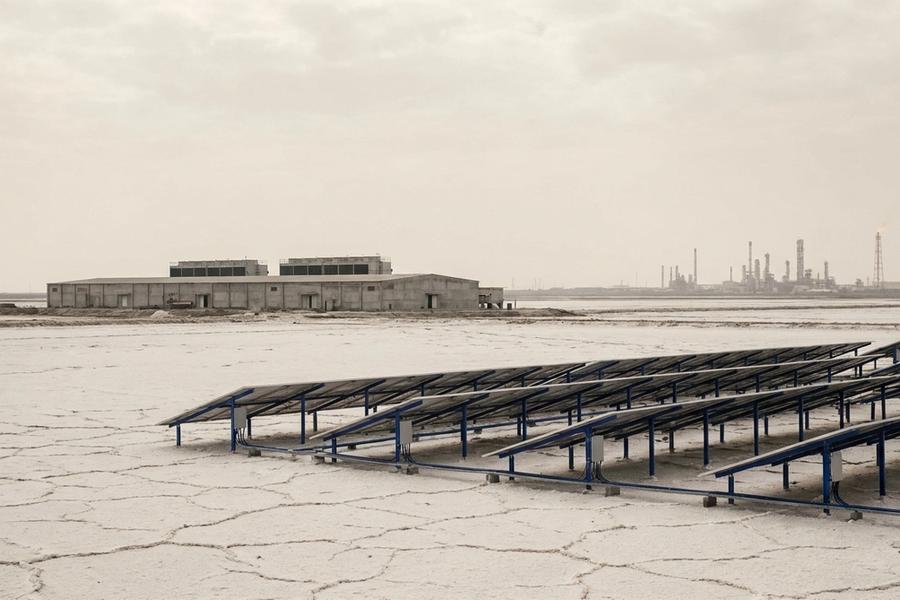
Jamnagar: why Reliance is building India's AI backbone next to its refinery
A quarter of India's refining capacity sits in one Reliance fence. Now the same site is promised 120 MW of AI compute by December, on solar power that has not yet arrived.
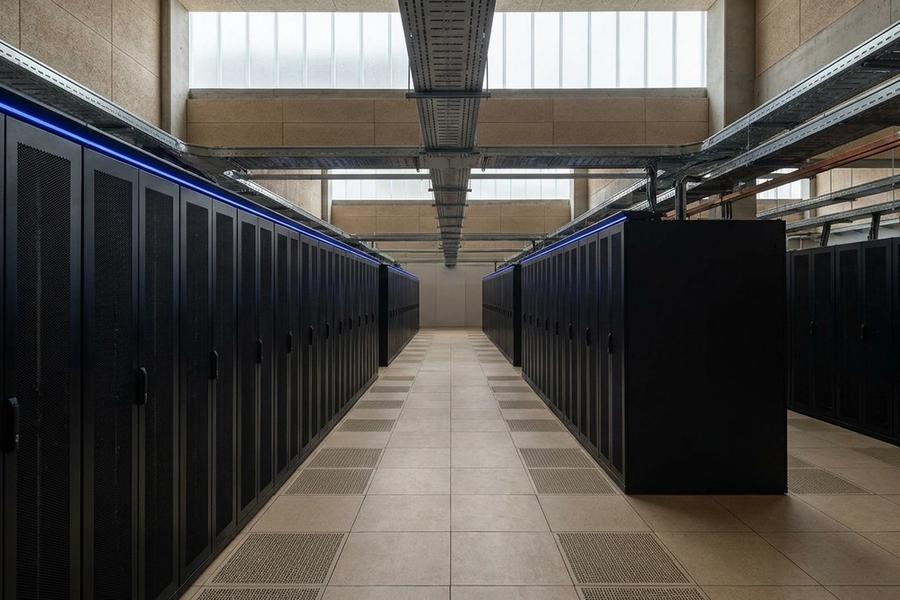
What is a megawatt of data centre? A field guide to MW, PUE, Tiers and GPU-hours
MeitY says India has about 1,575 MW of data centres. CBRE says it is heading for 2 GW. Both are right. Here is what every word in those headlines is actually counting.
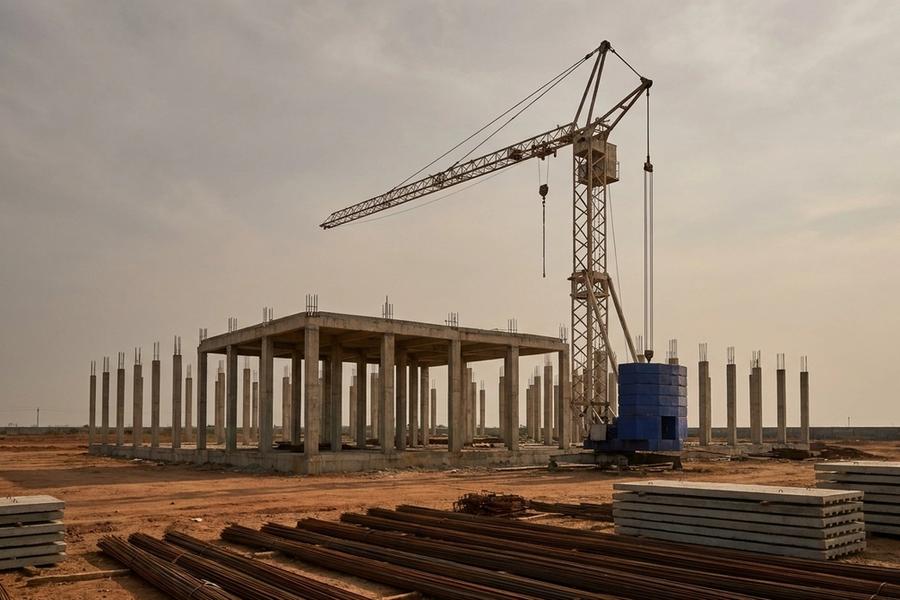
The 2047 tax holiday, read carefully: the concrete must be Indian, but only on paper
India will not tax foreign cloud firms' global income from Indian data centres until 2047. An August amendment lowered the gates further. What the bargain asks for in return is thinner than it sounds.