The 2047 tax holiday, read carefully: the concrete must be Indian, but only on paper
India will not tax foreign cloud firms' global income from Indian data centres until 2047. An August amendment lowered the gates further. What the bargain asks for in return is thinner than it sounds.

The short version · five beatsOpen ↓Close ↑
- AnchorYour phone backs up its photos tonight to a server somewhere.
- CrackWhere that server sits could decide who may tax the company; India has promised not to, until 2047.
- MachineSchedule IV entry 13C of the Income-tax Act: foreign company must not own or run the hall, an Indian company must, Indian sales go through an Indian reseller; 15% safe harbour; notifications removed in August 2026.
- The truth'Indian company' means incorporated here, not owned here: a hyperscaler's own subsidiary qualifies, and the mega-partnerships predate the law.
- Send-lineThe cloud can be foreign. The concrete only needs an Indian address.
The 2047 tax holiday is a simple bargain in complicated clothes: the workload may be foreign, the company running the concrete must be Indian, and "Indian" turns out to mean registered here, not owned here.
Tonight your phone will back up its photos to a server somewhere. For most of the last decade, where that server sat could decide who had a claim to tax the company that owns your photos. On 1 February 2026, India offered to settle the question in the cloud companies' favour for 21 years, on terms. Read them carefully.
What the Budget said
The finance minister's sentence was short.
“Recognising the need to enable critical infrastructure and boost investment in data centres, I propose to provide a tax holiday till 2047 to any foreign company that provides cloud services to customers globally by using data centre services from India. It will, however, need to provide services to Indian customers through an Indian reseller entity.”
— Nirmala Sitharaman, Union Budget speech, 1 February 2026, as quoted by The Hindu BusinessLineShe added a safe harbour of 15 per cent on cost where the Indian data centre is a related entity of the foreign company. The problem being solved was nexus. As EY's Ritika Loganey Gupta explained to Business Standard, a foreign cloud company running a data centre locally risks a "permanent establishment", which makes its attributable profits taxable in India. Revenue Secretary Arvind Shrivastava framed it the same way after the Budget: taxing a global company's income merely because a data centre sits in India could deter investment, ET reported.
The terms, as first enacted
The Finance Act, 2026, notified on 30 March, wrote the holiday into Schedule IV of the Income-tax Act, 2025, as entry 13C. As S&R Associates set out, a foreign company's income from procuring data centre services in India was exempt if four things held:
- the foreign company was notified by the Central Government;
- it did not own or operate any of the physical infrastructure or resources of the data centre;
- all its sales to users in India went through an Indian reseller company;
- it maintained and furnished prescribed information.
The data centre itself had to be "specified": set up under an approved scheme notified by MeitY, and owned and operated by an Indian company.
Two things are not exempt, and they matter. The Indian data centre's profits are taxed like any domestic company's. So is the Indian reseller's margin on sales to Indian customers. The PIB explainer is explicit that the holiday is for "global cloud operations routed through India-based data centres". It is an export incentive.
The terms, as they stand now
Six months later the gates were lowered. The Taxation and Other Laws (Amendment) Act, 2026, which received assent on 17 August and is deemed in force from 1 April, omitted the notification of the foreign company and redefined a specified data centre as one "operated by an Indian company, whether by way of owning or leasing", which "satisfies such other conditions as may be prescribed". The MeitY scheme and notification are gone. The income tax department's FAQ says the reporting requirement "is considered sufficient for allowing the data centre reform to operate".
Why lower the bar? The FAQ says stakeholders had represented that the "owned and operated" condition "may be somewhat restrictive", because an Indian company may run a data centre it has taken on lease. In plain terms, the holiday now reaches a hall financed and owned by anyone, so long as an Indian company operates it. The test moved from who owns the building to who runs it.
So the bargain today has three working parts: a foreign company that does not own or run the hall, an Indian company that does, and an Indian reseller standing between the foreign company and every Indian customer.
Read it carefully: what "Indian" means
The research this desk began from summarised the deal as "the workload can be foreign; the concrete must be Indian". That is right, and thinner than it sounds.
The law asks for an Indian company, not Indian ownership. Finance ministry sources told CNBC-TV18 in February that the foreign company's treatment "will remain the same irrespective of whether the Indian data centre is independently owned or is a subsidiary of the global entity". The 15 per cent safe harbour exists for exactly that case: a hyperscaler's own Indian subsidiary, paid cost plus a margin.
The Vizag paperwork shows how this looks in practice. The applicant for Google's project is Raiden Infotech India, which PTI describes as "a Google company". Andhra Pradesh's G.O. Ms. No. 66 of December 2025 allots the land to Adani Infra and provides that the Rambilli site will be transferred to Nxtra "for Raiden to operate". Even the Indian partners are mixed: AdaniConneX is a 50:50 joint venture between Adani Enterprises and EdgeConneX, and TPG is envisaged to hold between 27.5 and 49 per cent of TCS's HyperVault.
Why the big deals are partnerships anyway
The 2025-26 mega-announcements are partnerships, but the dates say the tax holiday did not make them so. Google and AdaniConneX announced Vizag on 14 October 2025, with Airtel as a partner. TCS and TPG announced HyperVault on 20 November 2025. Meta's 500 MW lease from Sify at Paradesipalem was reported by ET on 21 November 2025, citing an unnamed person; neither company commented. All three came before the Budget.
What the Indian partners bring is what a foreign company cannot easily get alone. Land: Andhra Pradesh allotted the Vizag parcels to an Adani company. Power: Adani's release promises co-investment in transmission lines, clean generation and storage, and about ₹15,000 crore of the state's incentive ceiling relates to electricity, as we read here. Landing: Meta's Waterworth cable is to land at Sify's station. The law then ratified a shape the market had already chosen.
The critics, at full strength
Revenue forgone. We found no official estimate. E A S Sarma, in an open letter to the finance minister in June, put the loss at about ₹95,000 crore for one gigawatt and more than ₹13 lakh crore over two decades, without fully showing his assumptions. The reply is that much of this was a contested claim rather than collected tax. Before the Budget, foreign cloud firms faced only the risk of a permanent-establishment claim, and Business Standard noted that a separate dispute, over withholding tax on Indian clients' payments to foreign cloud firms, is already in litigation. Both can be true. India forgoes little it was collecting, and possibly a great deal it would have collected had the companies come anyway.
It rewards the intermediaries. TK Arun, writing for IMPRI, called the mandatory reseller a "state-fostered freerider". KBS Sidhu, in ThePrint, traced the money: a lower after-tax cost raises what hyperscalers will pay for Indian capacity, which flows to the operators building it. Arun also assumed a wholly owned foreign data centre would get no holiday; the finance ministry's own clarification says otherwise.
It disadvantages Indian clouds. Indian cloud companies get no holiday at all. "We must ensure that the role of Indian entities is not inadvertently limited to that of a 'reseller' or 'toll collector' for foreign platforms," Abhishek Bhatt of the Bharat Digital Infrastructure Association told Business Standard. Yotta's Sunil Gupta disagreed in ET: "There is no tax concession on domestic cloud revenues."
Sovereignty in name. Sarma's letter raises the US CLOUD Act: an American company can be compelled to hand over data it controls, wherever the building stands. An Indian address on the hall does not change who holds the keys. We have argued the same about models and silicon.
Where it sits in the stack
The holiday is the third layer of a half-built policy. On 11 October 2022 the Department of Economic Affairs added data centres of at least 5 MW of IT load to the harmonised master list of infrastructure sub-sectors, opening the long-tenor infrastructure finance that a capital-first business lives on. That measure changed the builders' cost of money. The 2026 holiday changes the tenants' tax risk. Neither says anything about where a campus may draw its water. A 2020 draft national data centre policy was never notified, S&R notes; MeitY held industry consultations on a 2025 version in August 2025. On 14 October 2026 Jitin Prasada, minister of state for electronics and IT, said a policy was being rolled out, without giving a date, and ET noted that a final national policy has never been formally notified.
So India now has cheap capital for builders and tax certainty for foreign tenants, and still no national rule on siting, power or water. Fifteen states fill that gap with their own packages.
What we don't know
The amended law leaves the specified data centre to satisfy "such other conditions as may be prescribed". As of 20 October 2026 we could not find CBDT rules or forms that prescribe them. Until they appear, no company can be sure it qualifies. Nor could we find any public estimate, from the government, of revenue forgone, or any hyperscaler saying it has restructured to claim the holiday. ET reported in February that contracts between the global firms and Reliance, AdaniConneX, Digital Connexion and TCS might be renegotiated; none of those companies commented.
Those rules are also where this reading could be proved wrong. Nasscom urged MeitY in April 2026 not to attach capacity commitments, employment thresholds or domestic sourcing conditions. If the prescribed conditions do the opposite, and require real Indian ownership or local value, then the concrete becomes Indian in substance, and this desk read the bargain too cynically.
Sources 22
- Budget 2026: tax holiday for data centre to a foreign company to be subject to four conditions — The Hindu BusinessLine, 2026-02-04
- Tax holiday till 2047 to any foreign company that provides cloud services… safe harbour of 15 percent — PIB, 2026-02-01
- Tax holiday till 2047 (backgrounder) — PIB, 2026-02-14
- Indian Budget 2026-27: Tax Incentives for Data Centres — S&R Associates, 2026-04-07
- The Taxation and Other Laws (Amendment) Act, 2026 (as passed; assented 17 Aug 2026) — Parliament of India (via CAalley), 2026-08-17
- FAQs: The Taxation and Other Laws (Amendment) Bill, 2026 — Income Tax Department, 2026-08
- The Taxation and Other Laws (Amendment) Bill, 2026 — PRS Legislative Research, 2026-08
- Amendment to Taxation Act… get President's assent — The Hindu (PTI), 2026-08-18
- Finance Ministry clarifies data centre tax holiday — CNBC-TV18, 2026-02-04
- Why Budget tax sops to attract foreign investment upset Indian data centres — Business Standard, 2026-02-03
- Budget 2026: Foreign companies to get tax-free ride till 2047 — The Economic Times, 2026-02-01
- G.O.Ms.No. 66, ITE&C Department — Government of Andhra Pradesh, 2025-12-02
- Adani and Google partner to build India's largest data centre campus in Visakhapatnam — Adani Group, 2025-10-14
- TCS secures $1bn investment from TPG for HyperVault — TCS, 2025-11-20
- Meta to partner with Sify for 500 MW Visakhapatnam data centre — The Economic Times, 2025-11-21
- Tax holidays for foreign data centres: at what cost? — Countercurrents (E A S Sarma), 2026-06-09
- Rethinking government support for data centres — IMPRI (TK Arun), 2026-03-23
- Who are the real winners in the cloud services tax holiday — ThePrint (KBS Sidhu), 2026-02-06
- Tax 'edge' for foreign firms puts local data centre companies on edge — The Economic Times, 2026-02
- Industry consultation meeting of National Data Centre Policy 2025 — Digital India / MeitY, 2025-08-05
- India's data centre policy in works, says Jitin Prasada — The Economic Times, 2026-10-14
- Government Policy and Engagement Monthly Mailer, May 2026 — Nasscom, 2026-05-09
Every figure in this piece, and where it comes from 25 checked ↓
- Sitharaman: 'I propose to provide a tax holiday till 2047 to any foreign company that provides cloud services…through an Indian reseller entity.' — source
- 15% safe harbour on cost where the Indian data centre is a related entity — source
- Holiday covers global cloud operations routed through Indian DCs; domestic DC and reseller profits stay taxable; TY 2026-27 to 2046-47 — source
- Finance Act 2026 notified 30 March 2026; four conditions; specified DC = MeitY-notified approved scheme, owned and operated by Indian company; infra status 11 Oct 2022 for ≥5 MW; 2020 draft never notified — source
- EY: a foreign CSP running a local DC risks a permanent establishment; BDIA 'toll collector' quote; withholding dispute in litigation — source
- Revenue Secretary Arvind Shrivastava: taxing global income because a DC is in India could deter investment — source
- TOLA Act 2026 (Act 21 of 2026), assented 17 Aug 2026, deemed from 1 Apr 2026: omits foreign-company notification; specified DC 'operated by an Indian company, whether by way of owning or leasing' + prescribed conditions — source
- CBDT FAQ: reporting requirement 'considered sufficient for allowing the data centre reform to operate' — source
- President's assent to TOLA Act on 17 August 2026; passed by Parliament 10 August — source
- Bill removes MeitY scheme/notification condition and extends exemption to leased DCs — source
- Finance ministry sources: treatment same whether Indian DC is independently owned or a subsidiary of the global entity — source
- GO Ms 66 (2 Dec 2025): land to Adani Infra; Rambilli site to Nxtra 'for Raiden to operate' — source
- Raiden Infotech India Pvt Ltd is 'a Google company' (PTI) — source
- Google–AdaniConneX partnership announced 14 Oct 2025, Airtel a partner; AdaniConneX is 50:50 Adani Enterprises–EdgeConneX; co-investment in transmission, clean energy, storage — source
- TCS–TPG HyperVault announced 20 Nov 2025; TPG to hold 27.5–49% — source
- Meta to lease 500 MW from Sify at Paradesipalem; Waterworth to land at Sify station (ET, unnamed source; neither company commented) — source
- Sarma: ~₹95,000 crore revenue loss for 1 GW; >₹13 lakh crore over two decades; raises US CLOUD Act — source
- TK Arun: reseller a 'state-fostered freerider' — source
- KBS Sidhu: holiday raises hyperscalers' willingness to pay for Indian capacity — source
- Yotta's Sunil Gupta: 'There is no tax concession on domestic cloud revenues' — source
- MeitY industry consultation on National Data Centre Policy 2025, 5 Aug 2025 — source
- Jitin Prasada, 14 Oct 2026: policy being rolled out; final national policy never formally notified — source
- Nasscom (22 Apr 2026) cautioned against capacity, employment and domestic sourcing conditions — source
- FAQ: 'owned and operated' condition 'may be somewhat restrictive'; lease model allowed — source
- Contracts with Reliance, AdaniConneX, Digital Connexion, TCS may be renegotiated; companies did not respond — source
In this story 9
Tarka — “reasoning”
Principle-first and contrarian only when earned: states the claim, steelmans the other side, tests both against numbers, and names the condition under which it would be wrong.
More from the desk
AI & Data Centers →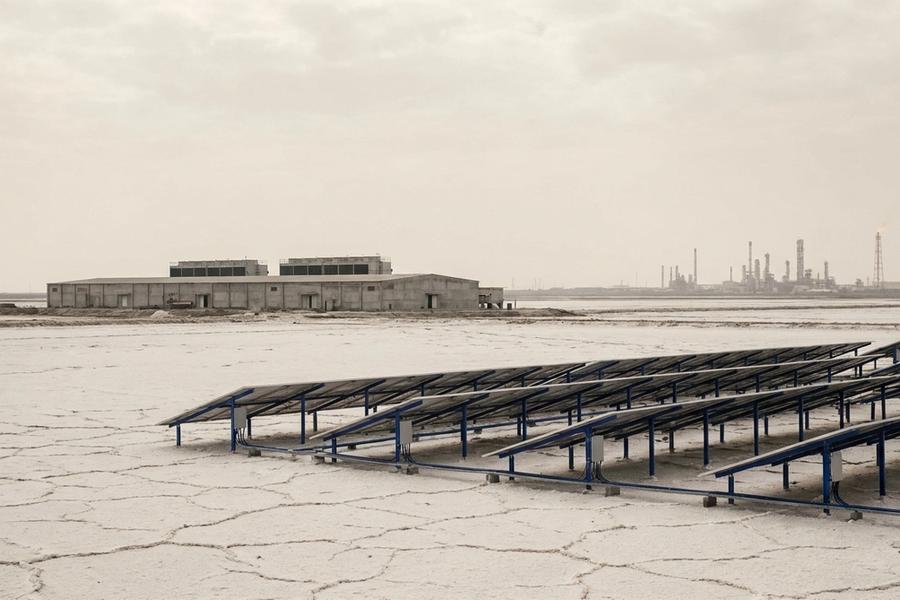
Jamnagar: why Reliance is building India's AI backbone next to its refinery
A quarter of India's refining capacity sits in one Reliance fence. Now the same site is promised 120 MW of AI compute by December, on solar power that has not yet arrived.
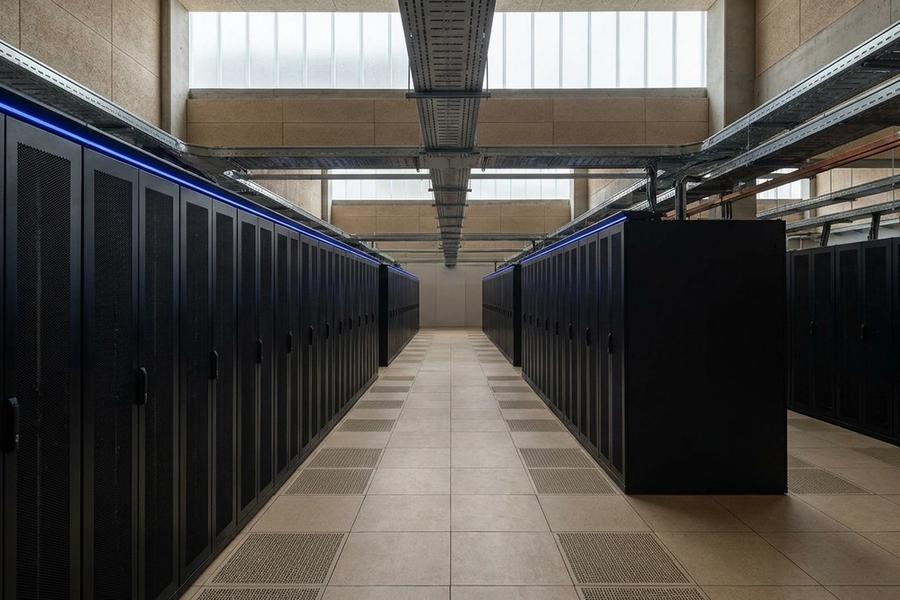
What is a megawatt of data centre? A field guide to MW, PUE, Tiers and GPU-hours
MeitY says India has about 1,575 MW of data centres. CBRE says it is heading for 2 GW. Both are right. Here is what every word in those headlines is actually counting.
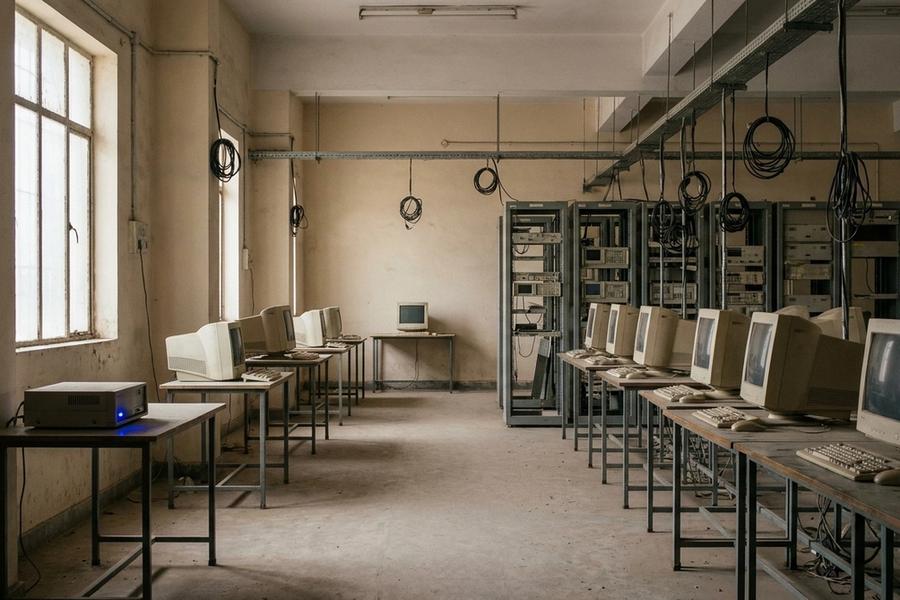
Online before China? The 1995 boast, and the state decisions behind India's data centres
VSNL's Independence Day internet was not first in Asia. What it began was a chain of state choices, from STPI's earth stations to RBI's data rule, that private capital has filled ever since.