Thirty jobs per 100 MW is America's number. India's is bigger, and still no Bhilai
Andhra Pradesh capped Google's Vizag incentives at ₹22,002 crore. The campuses' own filings list 1,725 permanent staff. Read the terms: the state is buying megawatts, not a township.

The short version · five beatsOpen ↓Close ↑
- AnchorThe line every minister says at a groundbreaking: this will create lakhs of jobs.
- CrackThe Vizag campuses' own environmental plans list 1,725 permanent staff for about a gigawatt.
- MachineA ₹22,002 crore, 20-year state incentive ceiling, most of it power; US benchmarks of 0.15-0.35 operators per MW; jobs figures that are 94% ecosystem modelling.
- The truthA data centre is the least labour-intensive large industry India has subsidised at this scale. It will not build a Bhilai, and neither, now, will steel.
- Send-lineWe are buying megawatts and calling them jobs.
A hyperscale data centre is the least labour-intensive large industry India has ever paid this much to attract, and no size of subsidy will make it build a Bhilai.
Start with the line every groundbreaking carries. When Google's AI hub in Visakhapatnam was announced in October 2025, Andhra Pradesh's IT minister put a number on it.
“This investment will generate 1.88 lakh direct and indirect jobs and have an economic impact of Rs 48,000 crore on the state within five years.”
— Nara Lokesh, Andhra Pradesh IT minister, press conference reported by The New Indian Express, 16 October 2025The number is not invented. It is also not a count of people who will work there. Read the terms carefully and the gap between the stage and the file is the whole story.
The number on the stage and the numbers in the file
The 1,88,220 figure came from what the state called independent assessments by Access Partnership and Google's own economic modelling. According to The Indian Express, it describes jobs "supported" each year from 2028 to 2032 across construction, data centre operations, engineering, IT and supply chains. It is a model of spending rippling outward, not a hiring plan.
The paperwork tells a smaller story. A reading of the state's orders and the campuses' environmental filings by The Late City found that the order approving the project contains no employment figure at all. The environmental management plans for the three campuses list the permanent staff they will need once running: 575, 650 and 500. That is 1,725 people, about 1,900 with contract workers, for roughly a gigawatt of capacity. The plans call the operating workforce "nominal".
Neither number is a lie. They answer different questions. The trouble starts when both are called "jobs".
What a megawatt actually employs
The best public benchmark comes from a November 2025 forecast by Angela Ryu and Shon Hiatt at the University of Southern California, published by the Hamm Institute. Building a data centre takes 0.7 to 2.0 workers per MW at peak. Running one takes 0.15 to 0.35 full-time equivalents per MW. The most automated campuses above 100 MW, the authors write, "can operate with as few as 20-30 permanent staff per 100 MW".
Virginia, often called the world's data centre capital, found the same shape. Its legislative auditor, JLARC, reported in December 2024 that a typical 250,000 sq ft data centre has about 50 full-time workers, half of them contractors, while about 1,500 workers are on site at the height of construction.
Here is where the hook this desk started with needs correcting. Thirty per 100 MW is the American floor. India runs its halls with more people. The Vizag environmental plans imply about 170 permanent staff per 100 MW. Andhra Pradesh's newer orders, which began carrying an "employment commitment" from June 2026, point the same way: CtrlS committed to 160 jobs for 100 MW and ReNew to 1,880 for 1,000 MW, according to The Late City's reading of the orders.
So India's number is five or six times America's. It is still small: under two thousand permanent people for a campus that, at full load, would use electricity equal to nearly half of Mumbai's annual consumption, by PTI's estimate.
What the big job numbers count
Two national figures carry most of the public argument. Open both.
The first is "one lakh jobs by 2030". It comes from Union minister Jitendra Singh, who told an AMCHAM summit in May 2026 that capacity would grow from 1.5 GW to about 6.5 GW, generating "nearly one lakh engineering jobs" in AI systems, cooling, smart grids, renewable integration and digital infrastructure, as reported by IANS. The remarks give no split between building the campuses and running them. Five gigawatts of new capacity at the Vizag ratio would need roughly 8,600 permanent operators. The rest of the lakh, whatever its basis, sits outside the buildings.
The second is "4.33 lakh jobs", from an August 2026 report by the property firm Square Yards on a 9,030 MW pipeline. Its own method is printed on the page: 3 direct jobs per MW, giving 27,090, plus ancillary jobs that make up the other 4,06,350. That is 94 per cent ecosystem. The report's benchmark page puts ecosystem employment at 10 to 20 jobs per MW; the footnote to its state table says the calculation assumes 45. The report's own thesis is candid: data centres "generate relatively modest direct employment".
The bill
Andhra Pradesh's Government Order No. 40 of 11 October 2025 approved ₹87,520 crore of proposed investment by Raiden Infotech, the Google subsidiary that applied. The order itself, as quoted by PTI, extends the incentives "with an overall cap of ₹22,002 crore", over 20 years. The MoU behind it has not been made public; the land fight around it is a separate story. The Hindu listed the parts: a 25 per cent land discount, a capital subsidy capped at ₹2,129 crore, SGST refunds, a ₹1 per unit power discount for 15 years, waivers on electricity duty, transmission charges and cross-subsidy surcharge, and a water tariff subsidy. By The Late City's count, about ₹15,000 crore of the ceiling relates to power.
Two cautions. This is a ceiling, not a cheque already written. And the order's test for extending the power discount is investment and capacity, not employment.
Now the arithmetic, which is ours. ₹22,002 crore divided by 1,725 permanent posts is about ₹12.8 crore per post, or roughly ₹64 lakh per post per year if spread evenly over two decades. At the American hyperscale ratio, the same ceiling would come to over ₹100 crore per post. The Union government's tax holiday to 2047 comes on top; we read its terms separately.
Bhilai, read honestly
The comparison everyone reaches for is steel. It deserves to be made carefully.
SAIL dates the Bhilai Steel Plant to 1955, with Soviet assistance, and its commissioning to 1959. An LSE anthropology project on the plant, archived in 2003, records that land from 96 villages was acquired, that one member of every land-losing family was given a right to a plant job, and that the site was chosen with "profits being secondary to employment in the planning priorities of the time". It put the regular workforce at 63,400 in 1987. In January 2018 the steel ministry told the Lok Sabha that Bhilai had 3,060 executives and 19,766 non-executives, and 33,580 quarters for officers and staff.
That is what "a Bhilai" means: a township, a union, a payroll that housed families for decades. A data centre will not build one. Neither, now, will steel. Set the 1987 count against the 2017 one and Bhilai's regular workforce fell by roughly two-thirds, over the same years in which the steel ministry was expanding its capacity from 3.9 to 7 million tonnes a year. The honest version of the comparison is not "data centres versus steel". It is that India no longer buys townships with its subsidies, and should stop describing what it buys as if it did.
The case for paying anyway
The other side has a real argument, and it is not mainly about operators.
Construction is employment. JLARC estimated Virginia's data centre industry supports 74,000 jobs a year, 80 per cent of them from the construction phase. On the Hamm Institute's ratios, a 1,000 MW campus needs 700 to 2,000 construction workers on site at its peak, for 18 to 24 months. Building is temporary per site, but a state that keeps building keeps those jobs, and the electricians and pipefitters it trains stay trained.
The tax base is real once incentives lapse. In Loudoun County, data centres provided 31 per cent of local tax revenue, JLARC found. Chief Minister Chandrababu Naidu made the same promise for Vizag: SGST, electricity duty and property tax after the incentive phase, as The Indian Express reported.
The jobs are downstream. IT services are India's largest service export, above USD 220 billion, as electronics minister Ashwini Vaishnaw noted on Budget day. The bet is that compute is the factory floor for that industry, and that the people are in the offices, not the halls.
Subsidies buy location, not headcount. States compete. If Andhra Pradesh had not paid, a neighbour would have. The order says plainly what it buys: investment and megawatts.
Put to the numbers, the steelman wins on construction and on location. It loses on permanence. As an infrastructure purchase, the bargain is defensible. As an employment programme, it is not one.
What would prove this wrong
The fix is not to stop paying. It is to price what is being paid for. Andhra Pradesh has already started writing employment commitments into some data centre orders; The Late City found none that carries a penalty or a clawback, and Google's order carries no number at all.
This argument is wrong if one thing happens. Lokesh's own counter is the right test: "When critics mocked Cyberabad, Chandrababu Naidu built it. Today, one lakh people work there," he said in the same press conference. If, by the early 2030s, the Vizag campuses have pulled tens of thousands of permanent jobs in offices around them, in AI services, engineering and cloud operations that would not otherwise have come, then the data centre was an anchor and this desk measured the wrong building. The campuses are due to start operating in July 2028. The accounts they file after that will settle it.
Sources 14
- Data Center Employment Forecast Analysis (Ryu & Hiatt, USC) — Hamm Institute, 2025-11
- Data Centers in Virginia — JLARC, Virginia General Assembly, 2024-12-09
- The Vizag data centre's 1,88,220 jobs are not in its government order — The Late City, 2026-10-02
- Andhra Pradesh offers ₹22,002-crore incentive package for Raiden Infotech Data Centre Project — The Hindu, 2025-10-21
- Google's Raiden Infotech to get ₹22,000 crore as incentives from Andhra — The Hindu BusinessLine (PTI), 2025-10-15
- Google bets on Visakhapatnam with $10 billion data centre that could generate 1.88 lakh jobs — The Indian Express, 2025-10-08
- Google investment will generate 1.88 lakh jobs in Andhra: Minister Nara Lokesh — The New Indian Express, 2025-10-16
- How India's data centre revolution is rewriting real estate — Square Yards Research, 2026-08
- Data centre capacity to reach 6.5 GW by 2030, creating 1 lakh engineering jobs: Jitendra Singh — LatestLY (IANS), 2026-05-22
- Bhilai Steel Plant — SAIL, 2026
- The Bhilai Steel Plant (Field to Factory project, archived) — London School of Economics, 2003
- Lok Sabha Unstarred Question 2174: Staff quarters at Bhilai Steel Plant — Ministry of Steel, 2018-01-01
- Rajya Sabha Unstarred Question 1184: Modernisation and expansion of public sector steel plants — Ministry of Steel, 2015-05-06
- Budget 2026-27 measures for electronics, IT and AI (Ashwini Vaishnaw) — PIB, 2026-02-01
Every figure in this piece, and where it comes from 19 checked ↓
- Lokesh: 'This investment will generate 1.88 lakh direct and indirect jobs…within five years.' — source
- 1,88,220 jobs 'supported' per year 2028-32 across construction, operations, IT, supply chain, per Access Partnership and Google modelling — source
- GO approving Google's project contains no employment figure; EMPs list 575, 650, 500 permanent staff (1,725; ~1,900 with contract) — source
- CtrlS committed 160 jobs for 100 MW; ReNew 1,880 for 1,000 MW; commitments carry no penalty; campuses due July 2028 — source
- About ₹15,000 crore of the ₹22,002 crore ceiling relates to power; power discount extension tied to investment and capacity milestones — source
- Hyperscale campuses can run on as few as 20-30 permanent staff per 100 MW; ops 0.15-0.35 FTE/MW; construction 0.7-2.0 per MW peak; 18-24 months — source
- Typical 250,000 sq ft data centre ~50 full-time workers, half contractors; ~1,500 on site at construction peak — source
- Virginia data centre industry: 74,000 jobs, 80% from construction phase; Loudoun 31% of local tax revenue — source
- Jitendra Singh: 1.5 GW to ~6.5 GW by 2030, 'nearly one lakh engineering jobs' — source
- Square Yards: 9,030 MW, 4,33,440 jobs = 27,090 direct (3/MW) + 4,06,350 ancillary (45/MW); benchmark page 10-20/MW — source
- GO 40 (11 Oct 2025): ₹87,520 crore investment, ₹22,002 crore incentive cap; land discount, ₹2,129 crore capital subsidy cap, ₹1/unit power, water subsidy — source
- 1 GW facility ≈ nearly 50% of Mumbai's annual electricity consumption; Raiden Infotech is a Google company — source
- Bhilai Steel Plant established 1955 with USSR assistance, commissioned 1959 — source
- Land from 96 villages; one member per land-losing family entitled to a job; regular workforce 63,400 in 1987 — source
- BSP on 1 Dec 2017: 3,060 executives, 19,766 non-executives; 3,145 officers' and 30,435 staff quarters — source
- Bhilai capacity expansion 3.9 to 7.0 MTPA (2015 Rajya Sabha answer) — source
- IT services exports exceed USD 220 billion (Vaishnaw, Budget day 2026) — source
- Naidu: state revenues via SGST, electricity duty, property tax after incentive phase — source
- GO text: 'SIPB has decided to extend the above-listed incentives with an overall cap of ₹22,002 crore', approved by council of ministers 10.10.2025 — source
In this story 5
Tarka — “reasoning”
Principle-first and contrarian only when earned: states the claim, steelmans the other side, tests both against numbers, and names the condition under which it would be wrong.
More from the desk
AI & Data Centers →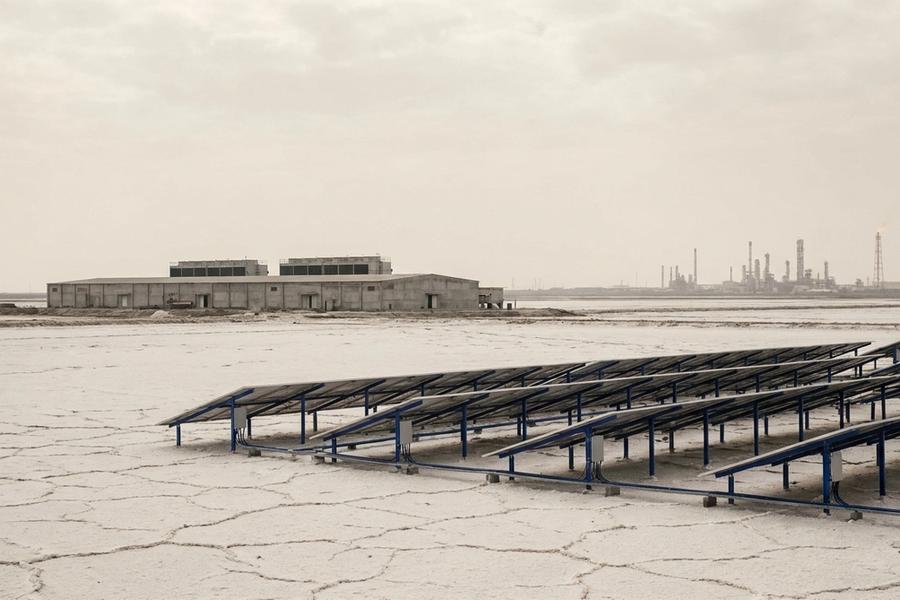
Jamnagar: why Reliance is building India's AI backbone next to its refinery
A quarter of India's refining capacity sits in one Reliance fence. Now the same site is promised 120 MW of AI compute by December, on solar power that has not yet arrived.
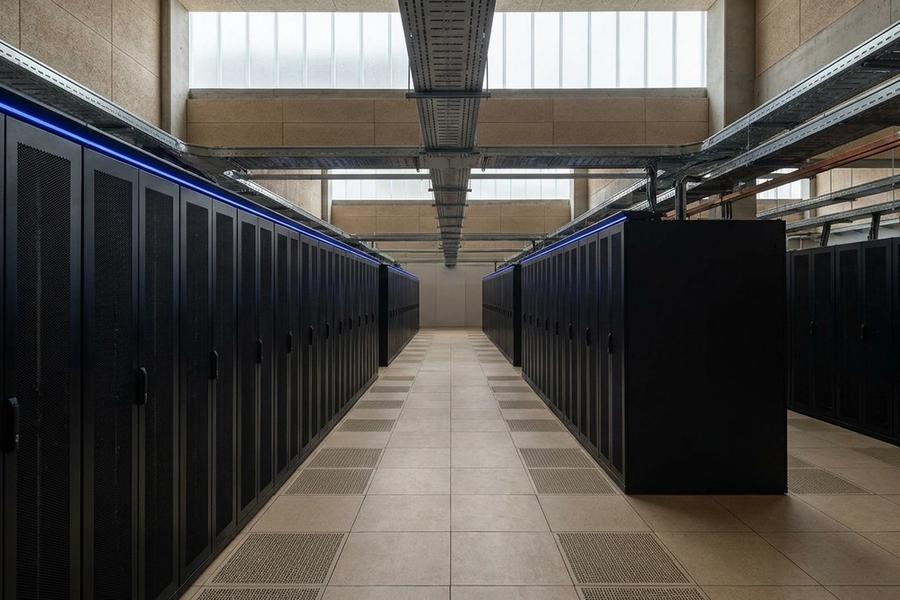
What is a megawatt of data centre? A field guide to MW, PUE, Tiers and GPU-hours
MeitY says India has about 1,575 MW of data centres. CBRE says it is heading for 2 GW. Both are right. Here is what every word in those headlines is actually counting.
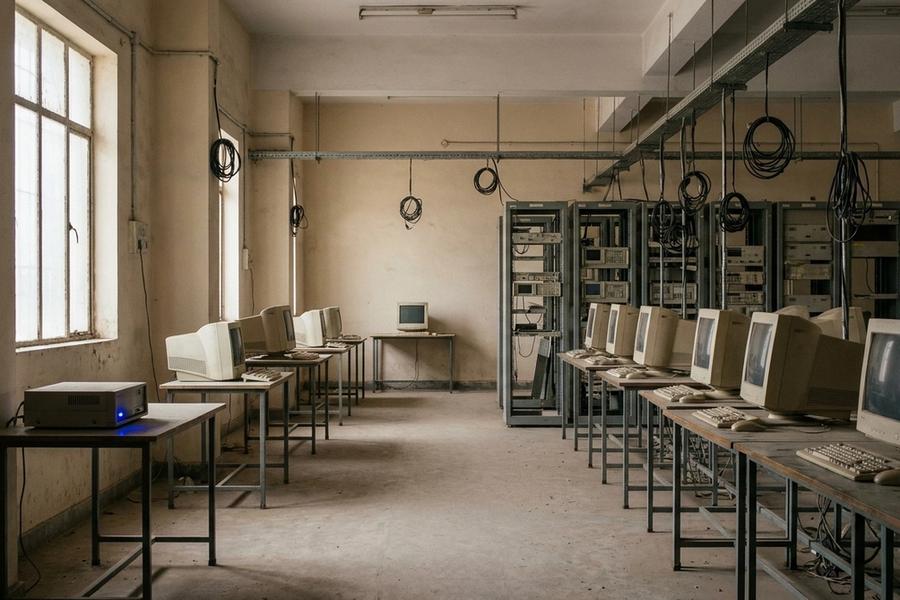
Online before China? The 1995 boast, and the state decisions behind India's data centres
VSNL's Independence Day internet was not first in Asia. What it began was a chain of state choices, from STPI's earth stations to RBI's data rule, that private capital has filled ever since.