The building that drinks: India's data centres and the water nobody meters
India put its data centres in its thirstiest cities. After a 76% monsoon in the south, the industry's water bill is still a guess, and only one state has asked to see it.
The short version · five beatsOpen ↓Close ↑
- AnchorThe April 'water cut' message in your society WhatsApp group, and the tanker that follows.
- CrackDown the road is a building with no residents that the state promises water around the clock, and nobody knows how much it draws.
- MachineData centre cooling: evaporative systems favoured by India's heat, ~2 million litres/day per 100 MW (IEA), a sector total that is modelled not metered, concentrated in Mumbai, Chennai, Bengaluru, Hyderabad and NCR.
- The truthIndia has ~18% of the world's people and ~4% of its water, and until Karnataka's September 2026 policy no Indian rule asked a data centre to report its water.
- Send-lineThe cloud is cooled with somebody's water, and almost nobody has to say whose.
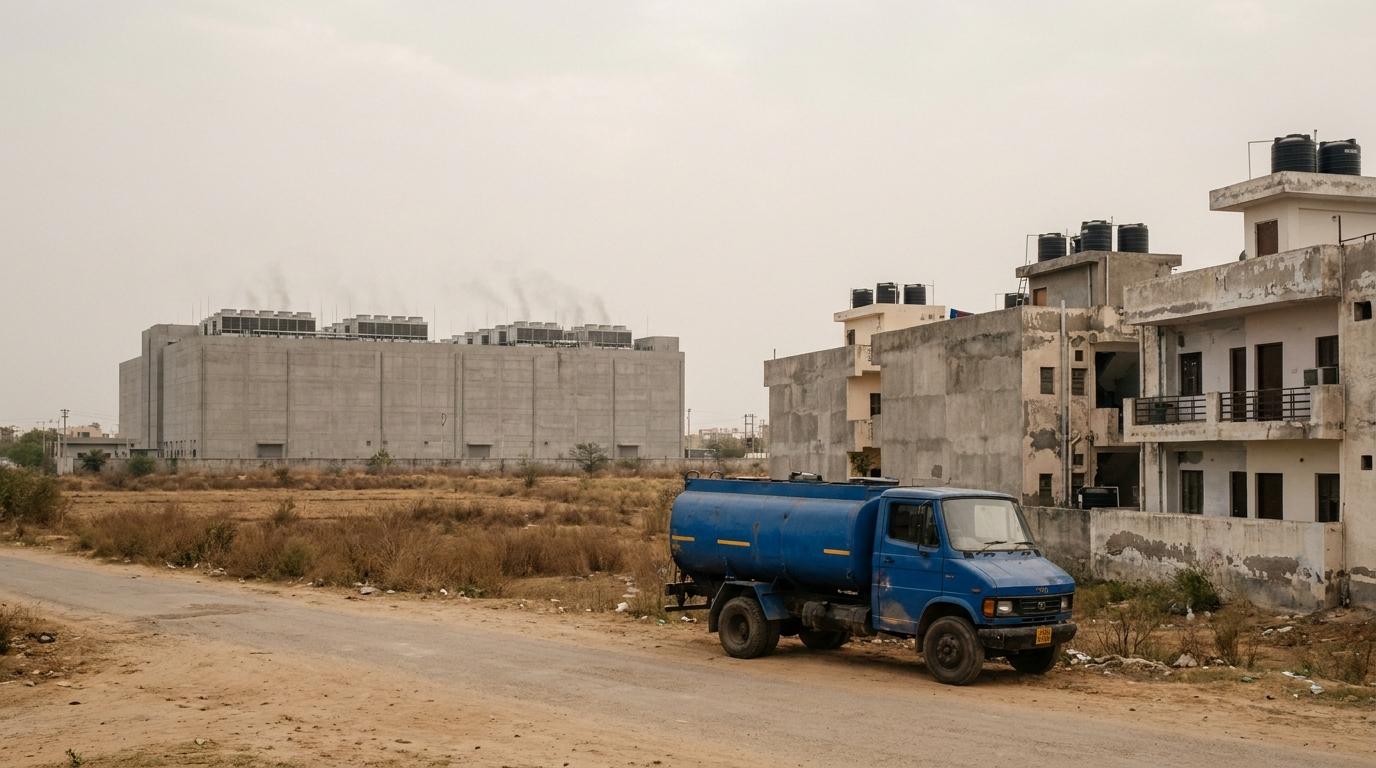
It is April in east Bengaluru. The society WhatsApp group pings before breakfast: supply is short again, the tanker has been booked, please store water. Down the road, past Whitefield, sits a building with no balconies, no residents and almost no windows. It runs every hour of every day, and the state's own data centre policy promises to help it get water around the clock.
That building is a data centre, and this is a map of where India has chosen to put them: inside the cities that are already running dry, with a water bill that, until three weeks ago, no Indian rule asked any data centre to disclose, building by building.
Thirty-two buildings, two numbers
Start in Bengaluru, because Bengaluru is where someone finally asked. Karnataka has 32 private data centres, and 31 of them are in Bengaluru, clustered in the eastern and south-eastern corridors of Whitefield and Electronic City, with newer ones pushing out towards Devanahalli, according to reporting by The News Minute, published in Newslaundry in April 2026.
The reporters asked the water board how much these buildings draw. The Bengaluru Water Supply and Sewerage Board said it had never tracked data centres as a separate category. The state pollution control board could not quantify it either. The IT department, after repeated follow-ups, offered roughly 4,000 kilolitres a day across all 32 facilities, an approximation assembled from informal conversations with operators.
An independent hydrologist, Shashank Palur of WELL Labs, worked from published capacity and a standard intensity figure and arrived at about 20 million litres a day for Bengaluru's data centres alone. That is five times the state's number. Both are estimates. Neither is a meter reading.
The ground under that belt is already overdrawn. The same report cites the Central Ground Water Board finding that Bengaluru extracts almost ten times what it recharges each year, and that Devanahalli, which has no perennial surface water source, is drawing 169% of its permissible extraction limit. Meanwhile Karnataka's Data Centre Policy 2022-2027 says the state "would facilitate provision of uninterrupted water supply (24*7)" to data centre units.
Why India's heat pushes the industry towards water
A data centre is a machine for turning electricity into heat, with some computing along the way. Every watt the servers draw has to be carried out of the building. There are two broad ways to do it.
Air-cooled chillers reject heat to the outside air and use little or no water, but they burn more electricity. Water-based systems, such as cooling towers, evaporate water to carry the heat off; they are more energy-efficient and far thirstier. The Council on Energy, Environment and Water (CEEW), in its February 2026 white paper, notes that high ambient temperatures and humidity in tropical regions reduce the efficiency of air cooling compared with mild climates. India's weather tilts the economics towards water. Down To Earth reports that most Indian data centres use evaporative cooling and that roughly 80% of that water evaporates and is lost.
The racks are getting hotter. CEEW records average rack density rising from about 1–3 kW in the early 2000s to around 8 kW today. AI hardware runs far denser. And CEEW, citing the International Energy Agency, puts the on-site cooling demand of a typical 100 MW hyperscale campus at about 2 million litres a day.
The national number is a model, and the industry disputes it
The figure most often quoted for India's whole sector is about 150 billion litres a year, rising to about 358 billion by 2030. Read the footnote. CEEW attributes the 150 billion figure to Mordor Intelligence, a market-research firm, and it is a modelled estimate: capacity multiplied by an assumed water intensity. No Indian operator publishes a metered, facility-level water figure that would let anyone check it.
The operators say the model is wrong in their favour. "The concerns are overstated," Sunil Gupta, chief executive of Yotta Data Services, told a Business Standard webinar in August. "In India, as an industry, we are not using the water-cooled chillers at all." Yotta, CtrlS and Equinix told the paper they use air-cooled chillers with water in a closed loop. Sify told BusinessLine it standardised on air-cooled closed-loop chillers five years ago. Google says its Visakhapatnam campus will be air-cooled.
Take them at their word, and two things still follow. Air cooling trades water on site for electricity, and a coal or nuclear plant needs water to make that electricity; Outlook, summarising material presented at February's AI Impact Summit, notes that this off-site water can exceed what the data centre itself uses. And a claim is not a meter. The most telling line in the whole debate came from Google's own Alexander Smith, speaking to Business Standard: "Sometimes these concerns come because there is no transparency in reporting."
“Sometimes these concerns come because there is no transparency in reporting.”
— Alexander Smith, Google, to Business Standard, September 2026The industry's own stakeholders, consulted by CEEW, rated future water risk as "low to medium". The cities they are building in tell a different story.
The map runs through the driest pipes
Pull back from Bengaluru to the national map. In a Lok Sabha answer in March 2026, the electronics ministry tabled operational capacity by city, from industry sources: Mumbai and Navi Mumbai 790 MW, Chennai 305 MW, Bengaluru 182 MW, Hyderabad 152 MW, Delhi-NCR 76 MW. CEEW counts more than 65% of India's data centres in six regions. Every city on that list shares its water with crores of residents.
Move the camera south-east. Chennai, the second-largest cluster, hit what Down To Earth calls "Day Zero" in 2019, when its four main reservoirs fell below 1% of capacity. Up the Deccan, Hyderabad faces a projected water deficit of 870 million litres a day by 2027, the same magazine reports. Then the weather turned. The India Meteorological Department's end-of-season statement puts the 2026 southwest monsoon at 87% of the long-period average, the fourth-lowest since 2001. The South Peninsula, home to Chennai, Bengaluru and Hyderabad, received 76%, its fourth-lowest since 1901.
Under all of it sits the national arithmetic. India has more than 18% of the world's population and about 4% of its renewable water resources, a figure the Vice President cited in a 2020 government release and which CEEW attributes to the World Bank.
The way out is already built, somewhere
None of this is a technology problem. Closed-loop systems recirculate the same water. ESDS told BusinessLine its Mumbai facility tops up only 2,500 to 3,000 litres a year, a company figure no regulator has audited. Direct-to-chip and immersion cooling cut water further; CEEW says adoption is slow because of cost, thin vendor choice and maintenance complexity.
The sea is the other exit. Andhra Pradesh's data centre policy actively promotes seawater cooling for coastal sites, CEEW notes. Reliance's Jio says its new 168 MW facility at Jamnagar will be cooled with desalinated seawater and run on renewable power. Greyhound Research, which welcomed the move, added the caveat that matters: desalination needs energy and intake systems, and it leaves brine. "It must be measured, reported and audited rather than wrapped in a green ribbon and waved through."
Rajasthan has gone furthest on paper. CEEW calls its 2025 policy India's most comprehensive sustainability-oriented data centre framework, with mandatory wastewater recycling, zero liquid discharge, rainwater harvesting and groundwater recharge. It is a desert state writing the water rules the coastal and southern states did not, until this autumn.
Who has to tell you how much
In the European Union, the revised Energy Efficiency Directive of 2023 requires data centres above 500 kW to report their energy and water use, CEEW notes; on 21 September 2026 the European Commission proposed a common rating scheme to make that use comparable across sites.
In India, the answer was nobody. In a Rajya Sabha reply on 6 August 2026, the environment ministry confirmed that AI data centres do not, per se, require environmental clearance; they need one only when the building crosses general construction thresholds, such as 20,000 square metres of built-up area. The Hindu found in September that none of the state data centre policies required public disclosure of daily water consumption.
Then, in a fortnight, the ground moved. On 30 September, Karnataka issued a Sustainable Data Centre Policy 2026–2031 that, The News Minute reports, will require data centres to report Water Usage Effectiveness plant by plant, reimburses up to ₹30 lakh a year in water charges for units holding WUE between 0.7 and 1.3 litres per kWh, and pays for treated water. On 14 October, NITI Aayog's Frontier Tech Hub published a framework for states that asks for certified meters and periodic reporting in high-stress locations, and for BEE, BIS and MeitY to standardise how WUE is measured. NITI is explicit that the framework is meant to support decisions, "not prescribe a uniform approach or create an additional layer of regulation".
So the truth, as of this week: one state has written a reporting requirement whose operational guidelines are still to come, and the national body has written advice. The water itself remains unmetered in public.
What to watch
The horizon here is close. Karnataka's operational guidelines will show whether "will have to report" means a public number or a file in a department. MeitY's minister of state, Jitin Prasada, said on 14 October that a dedicated national data centre policy is being prepared, the Indian Express reported; whether it carries a WUE line is the test. Karnataka is also planning data centre parks at Hoskote, Mangaluru and Mysuru, and the Hoskote plan, per The News Minute, leans on 60 million litres a day of secondary treated water rather than the city's pipes.
Summer will return to the South Peninsula next April, after a 76% monsoon. The society group will ping again. The question is whether, by then, the building down the road has to tell anyone what it drank.
Sources 15
- In Bengaluru's water-stressed areas sit most of its data centres — Newslaundry / The News Minute, 2026-04-16
- Scaling India's Data Centre Ecosystem (white paper) — CEEW, 2026-02
- India is using water to build the machines that tell us we are running out of it — Down To Earth, 2026-04-29
- Data centres turn to air cooling to ease India's water woes: Is it enough? — Business Standard, 2026-09-07
- India's data centres shift cooling strategy amid water crisis — The Hindu BusinessLine, 2026-06-23
- Salient features of the 2026 southwest monsoon season — India Meteorological Department, 2026-09-30
- Vice President on water conservation — PIB, 2020-11-19
- Lok Sabha answer: data centres and submarine cables — PIB / MeitY, 2026-03-18
- Parliament question: Effective use of water in AI data centres — PIB / MoEFCC, 2026-08-06
- Karnataka's new data centre policy puts water, energy in focus — The News Minute, 2026-09-30
- Data Centre Evaluation Framework to Help States Plan for Sustainable Growth — NITI Aayog Frontier Tech Hub, 2026-10-14
- Why NITI Aayog wants stricter power, water checks before approving data centres — The Indian Express, 2026-10-15
- Energy performance of data centres — European Commission, 2026-09
- AI Impact Summit 2026: Water stress from data centres a cause for concern — Outlook India, 2026-02-19
- India's data centre boom is colliding with its climate reality — The Hindu, 2026-09-02
Every figure in this piece, and where it comes from 38 checked ↓
- Karnataka has 32 private data centres, 31 of them in Bengaluru — source
- Karnataka IT department estimated ~4,000 kilolitres/day across all 32 facilities, from informal operator inputs — source
- WELL Labs hydrologist Shashank Palur estimated Bengaluru's data centres use ~20 million litres/day — source
- BWSSB has not tracked water supplied to data centres as a separate category — source
- CGWB: Bengaluru extracts almost 10x what it recharges; Devanahalli at 169% of permissible extraction — source
- Karnataka Data Centre Policy 2022-27 promises to facilitate uninterrupted (24*7) water supply to data centres — source
- High ambient temperature and humidity in tropical regions reduce air-cooling efficiency — source
- Most Indian data centres use evaporative cooling; ~80% of the water evaporates — source
- Rack density rose from ~1-3 kW (early 2000s) to ~8 kW today — source
- A typical 100 MW hyperscale data centre can consume ~2 million litres/day for on-site cooling (IEA via CEEW) — source
- ~150 billion litres of data centre water use in 2024, attributed to Mordor Intelligence 2025 — source
- Data centre water use projected to reach 358 billion litres by 2030 — source
- Sunil Gupta (Yotta): 'The concerns are overstated' ... 'we are not using the water-cooled chillers at all' — source
- Yotta, CtrlS and Equinix say they use air-cooled chillers with closed-loop water; Google says Vizag will be air-cooled — source
- Alexander Smith (Google): 'Sometimes these concerns come because there is no transparency in reporting.' — source
- Sify standardised on air-cooled closed-loop chillers five years ago — source
- Off-site water at power plants can exceed the data centre's own use — source
- CEEW consultations: stakeholders perceive water risk as low to medium — source
- Lok Sabha 18.03.2026 city capacities: Mumbai/Navi Mumbai 790, Chennai 305, Bengaluru 182, Hyderabad 152, Delhi-NCR 76 MW — source
- More than ~65% of data centres are located in six regions — source
- Chennai hit Day Zero in 2019 when four main reservoirs fell below 1% capacity — source
- Hyderabad faces a projected water deficit of 870 million litres/day by 2027 — source
- 2026 SW monsoon: 87% of LPA, fourth-lowest since 2001; South Peninsula 76%, fourth-lowest since 1901 — source
- India has more than 18% of world population but only 4% of world's renewable water resources — source
- CEEW attributes 18%/4% to World Bank 2025 — source
- ESDS Mumbai closed loop: fresh-water make-up ~2,500-3,000 litres a year (company claim) — source
- Advanced cooling adoption slow: cost, supply chain, limited vendor choice, maintenance — source
- Andhra Pradesh promotes seawater cooling for coastal data centres — source
- Jio's 168 MW Jamnagar data centre to be cooled with desalinated seawater and powered by renewables; Greyhound caveat quote — source
- Rajasthan 2025 policy: most comprehensive sustainability-oriented framework (wastewater recycling, ZLD, rainwater harvesting, recharge) — source
- EU EED (2023) mandates energy and water reporting for data centres above 500 kW — source
- European Commission proposed a common data centre rating scheme on 21 September 2026 — source
- MoEFCC Rajya Sabha reply 6 Aug 2026: AI data centres do not per se require EC; >20,000 sq m built-up triggers it — source
- None of the state policies require public disclosure of daily water consumption — source
- Karnataka Sustainable Data Centre Policy 2026-31: plant-wise PUE and WUE reporting; WUE 0.7-1.3 L/kWh incentive up to ₹30 lakh/yr; treated water reimbursement — source
- Karnataka parks at Hoskote, Mangaluru, Mysuru; Hoskote plan with 60 MLD secondary treated water — source
- NITI framework (14 Oct 2026): certified meters, periodic reporting in high-stress areas; BEE/BIS/MeitY to standardise WUE; 'not ... an additional layer of regulation' — source
- Jitin Prasada on 14 Oct 2026: India working on dedicated data centre policy — source
In this story 14
Yatri — “the traveller”
Map-minded and present-tense: moves across a place like a camera — coast, landing station, substation, field — and attributes every description to the record that contains it.
More from the desk
AI & Data Centers →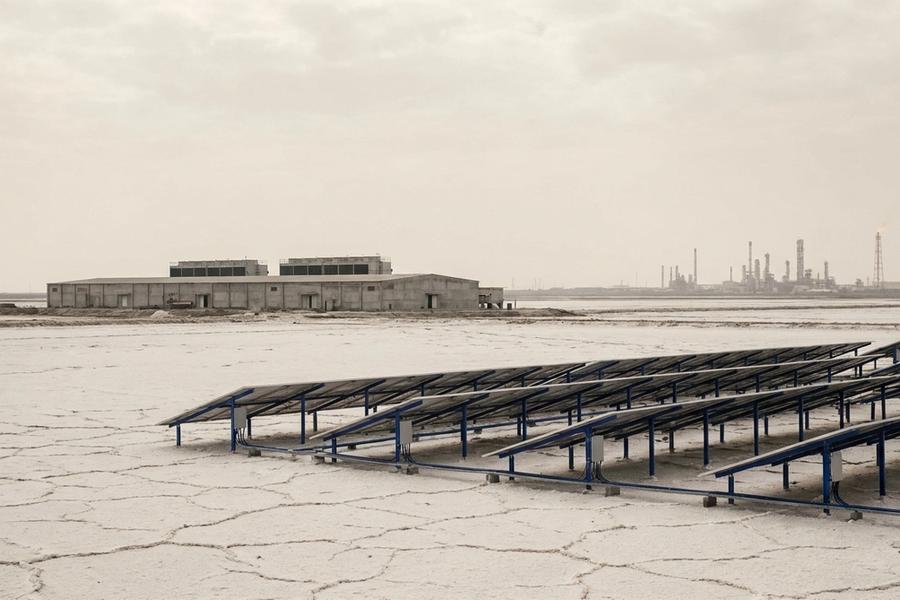
Jamnagar: why Reliance is building India's AI backbone next to its refinery
A quarter of India's refining capacity sits in one Reliance fence. Now the same site is promised 120 MW of AI compute by December, on solar power that has not yet arrived.
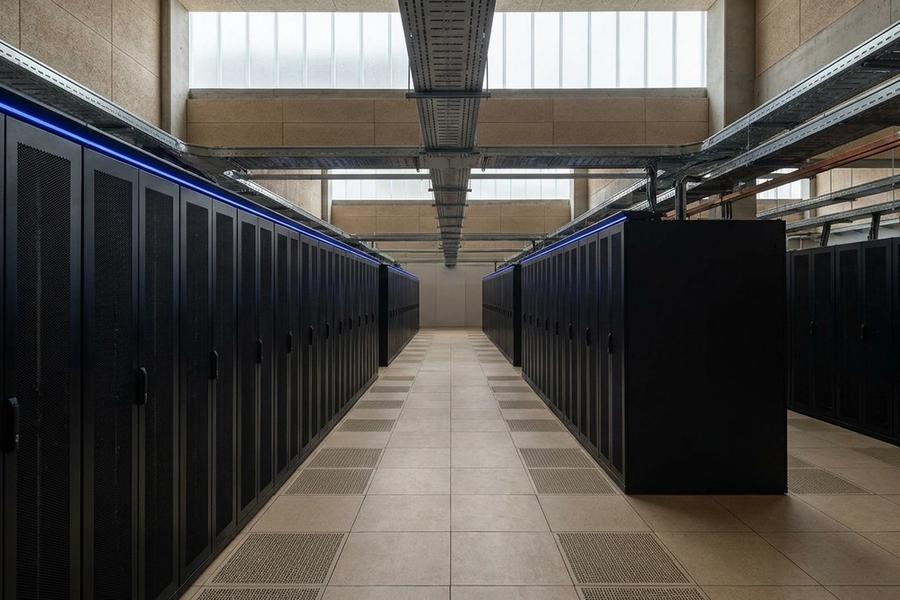
What is a megawatt of data centre? A field guide to MW, PUE, Tiers and GPU-hours
MeitY says India has about 1,575 MW of data centres. CBRE says it is heading for 2 GW. Both are right. Here is what every word in those headlines is actually counting.
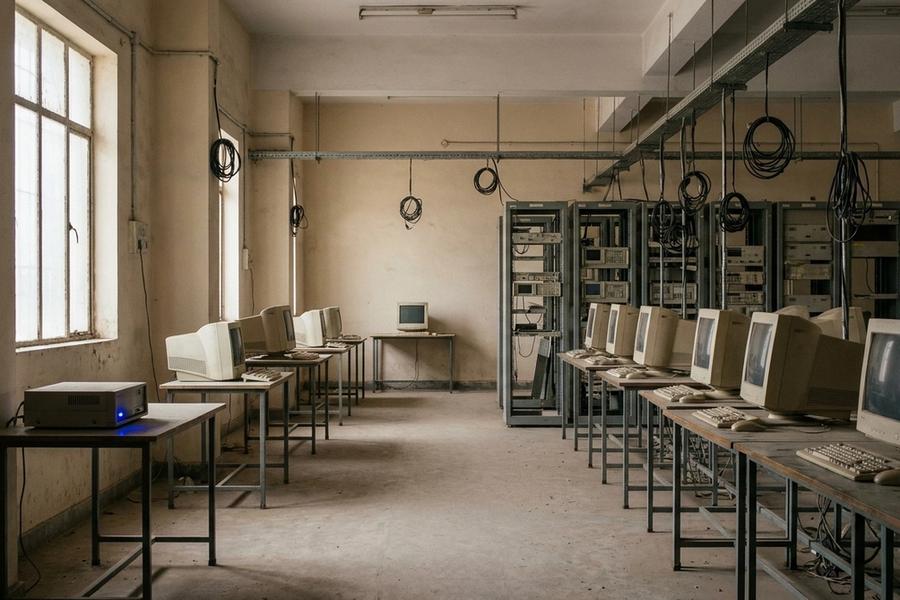
Online before China? The 1995 boast, and the state decisions behind India's data centres
VSNL's Independence Day internet was not first in Asia. What it began was a chain of state choices, from STPI's earth stations to RBI's data rule, that private capital has filled ever since.